
Building a Scalable Foundation for Multi-Market Local SEO
This Local SEO case study showcases work completed by Astound Media, the company behind Govanta, for BlueDot Cares. As the organization expanded into new markets, it needed a website architecture that could support long-term growth without requiring the manual management of hundreds of individually built service-location pages. Rather than continuing to create and optimize each page manually, we designed a scalable framework that separated core service pages from standardized service-location pages, creating a more efficient, maintainable, and search-friendly foundation.
The solution combined custom WordPress architecture, technical SEO, structured content, and location-based optimization into a repeatable system capable of supporting more than 560 service-location pages. By establishing a consistent information architecture and governance model, BlueDot Cares gained a digital foundation designed to simplify website management, strengthen local search visibility, and scale alongside the organization’s continued growth.

The Challenge
As BlueDot Cares expanded into additional markets, its website evolved organically. Service and location pages had been created individually over time, resulting in inconsistent layouts, URL structures, and content that became increasingly difficult to manage and scale. While the approach supported the organization’s early growth, it also introduced significant maintenance overhead and made expansion into new service areas increasingly complex.
Rather than continuing to optimize individual pages, Astound Media, the company behind Govanta, approached the engagement as an architectural challenge. The objective was to create a scalable website framework that could support long-term growth, standardize content across hundreds of pages, strengthen local search visibility, and simplify ongoing website management without sacrificing flexibility.

As the website continued to grow, maintaining consistency across hundreds of pages became increasingly challenging. Content updates required unnecessary manual effort, and the existing structure wasn’t designed to efficiently support expansion into additional markets.
Instead of treating every new page as a standalone project, we developed a repeatable website architecture that organized services, locations, and supporting content into a scalable framework. This created a more consistent experience for both users and search engines while significantly improving long-term maintainability.
The result was a digital foundation capable of supporting more than 560 service-location pages while remaining organized, flexible, and easy to expand.
Strong local search performance begins with thoughtful website architecture. By establishing a scalable framework from the outset, BlueDot Cares was better positioned to support future growth, improve operational efficiency, and maintain a consistent digital experience across every market.
The Solution
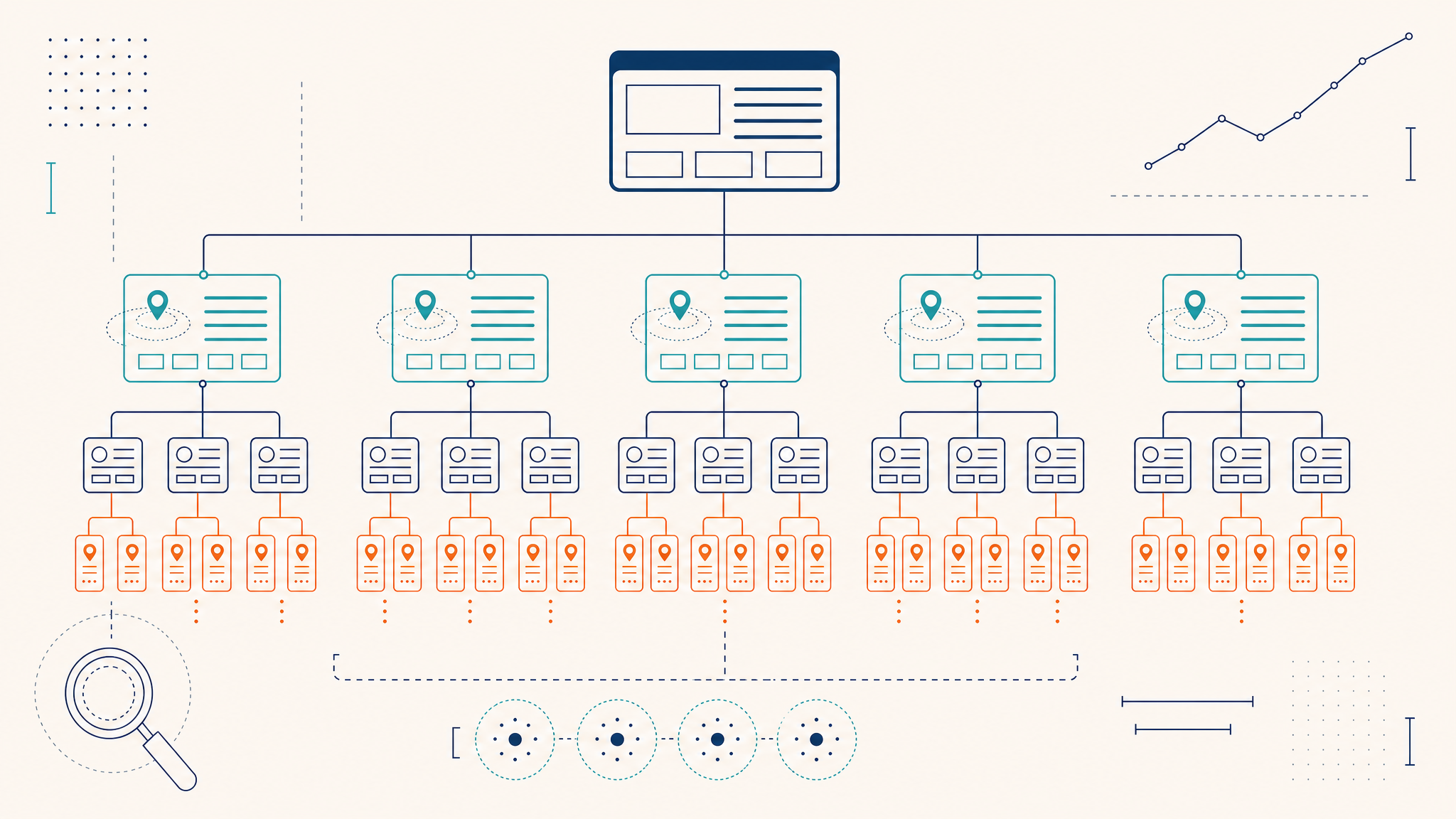
Rather than expanding the website page by page, we designed a scalable information architecture that separated market hubs, service hubs, and service-location pages into a repeatable framework. This created a clear hierarchy that supported future growth while simplifying navigation and long-term governance.
Custom WordPress development played a central role in the implementation. Reusable templates, modular content structures, and custom WordPress functionality reduced manual maintenance while ensuring every new page followed the same architectural standards.
The solution wasn’t simply a larger website—it was a governed platform engineered to scale consistently as new markets, services, and locations were introduced.

By combining technical SEO, custom WordPress development, and scalable information architecture, the platform established a foundation that supports long-term growth instead of requiring continual redevelopment.
Measurable Results
By replacing an organically grown website structure with a scalable architecture, BlueDot Cares established a stronger foundation for long-term local search growth. The new framework now supports more than 560 service-location pages while improving consistency, simplifying ongoing website management, and creating measurable improvements in organic search performance. Since implementation, the average Google Search position has improved from approximately 57 to 20 and continues to improve as additional optimization and authority-building efforts are implemented.
*¹ Average Google Search position reflects the primary measurement period documented in this case study. Search performance continues to evolve as additional content, optimization, and authority-building initiatives are implemented.

